Traditional vs. Robotic Surgery for Knee Replacements
In the realm of orthopedic surgeries, the landscape has dramatically evolved with the advent of advanced technologies, particularly in knee replacement procedures. The debate between Traditional and Robotic Surgery for Knee Replacements has captivated the medical community, triggering discussions on efficacy, precision, recovery, and patient outcomes. Delving into these methodologies with a meticulous lens, our aim is to offer an exhaustive comparison, aiding individuals in making informed decisions about their orthopedic health.
Understanding Traditional Knee Replacement Surgery
Traditional knee replacement surgery, a time-tested method, has been the cornerstone of addressing debilitating knee conditions for decades. In this approach, surgeons meticulously replace damaged joint surfaces with prosthetic components, aiming to restore mobility and alleviate pain. The procedure involves a skilled surgeon using precise manual techniques and instruments to resurface the affected areas, often guided by their expertise and experience.
The Process of Traditional Knee Replacement
During the procedure, the surgeon initiates by making an incision, accessing the knee joint to remove damaged bone and cartilage. Subsequently, the damaged surfaces are replaced with prosthetic components, meticulously aligning them for optimal joint functionality. Post-operation, a period of rehabilitation and physical therapy aids in restoring mobility and strength.

The Emergence of Robotic Knee Replacement Surgery
The evolution of medical technology introduced Robotic Knee Replacement Surgery This innovative technique harnesses the power of robotics and imaging to use 3D planning based on each patient's anatomy.
The Robotic Surgery Approach
Robotic-assisted knee replacement integrates cutting-edge imaging, computer navigation, and robotic arm technology. This allows surgeons to create a personalized 3D model of the patient's knee, enabling precise planning and execution during the surgery. The robotic arm assists the surgeon in executing the pre-defined plan with exceptional accuracy, enhancing implant alignment and positioning.

Comparative Analysis: Traditional vs. Robotic Knee Replacement
- Accuracy and Precision
Traditional surgery heavily relies on the surgeon's proficiency and experience, whereas robotic surgery offers enhanced precision due to the 3D mapping and robotic assistance, potentially reducing human error. - Customization and Personalization
Robotic surgery excels in customization, utilizing preoperative imaging to create a tailored plan for each patient, optimizing implant fit and alignment compared to traditional methods. - Recovery and Rehabilitation
While both methods facilitate post-operative recovery, robotic surgery's precision may contribute to some studies report differences in early recovery; evidence on complications is mixed.In the ever-evolving landscape of orthopedic surgery, the debate between Traditional and Robotic Knee Replacement Surgery persists. Both methodologies offer viable solutions, each with its own set of advantages. Robotic surgery adds computer planning and robotic guidance to knee replacement.
Conventional and Robotic Knee Replacement with Dr. Amyn Rajani
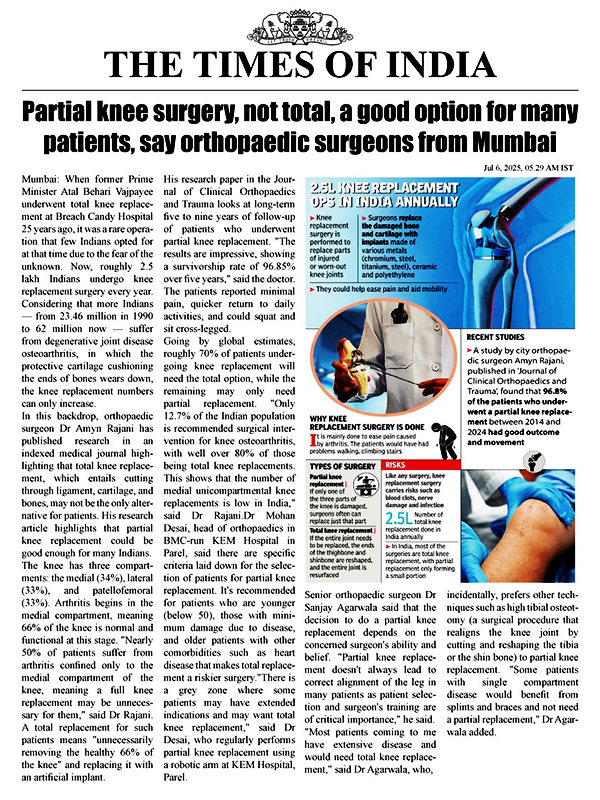
Dr. Amyn Rajani, an orthopaedic surgeon in Mumbai, performs both conventional and robotic-assisted knee replacements. With expertise in both Traditional and Robotic Surgery methodologies, Dr. Rajani offers patients a spectrum of choices to address their orthopedic concerns., ensuring that treatment is planned around each patient's condition. Whether opting for the time-honored Traditional Surgery or the innovative precision of Robotic Surgery, the choice of technique is discussed with each patient, including benefits, limitations and risks.