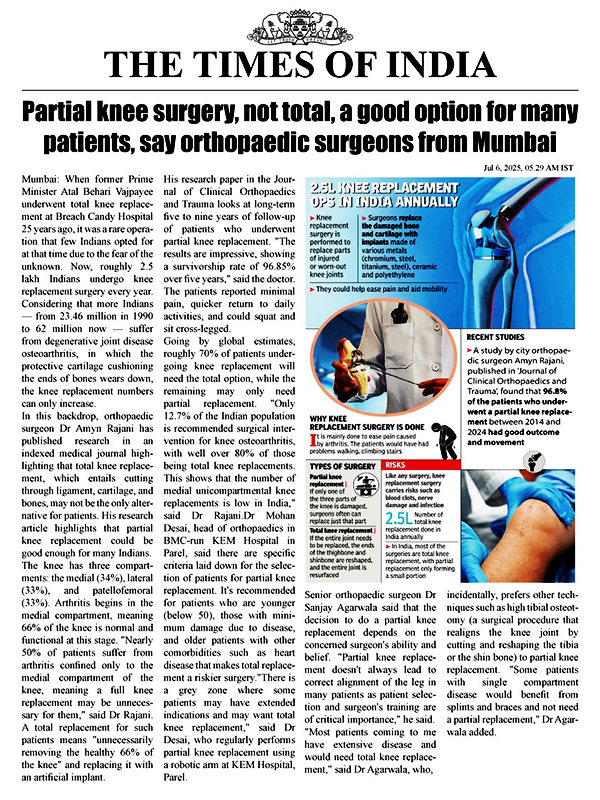

Robotic Total Hip Replacement in Mumbai
Personalised, Precisely Planned Hip Replacement
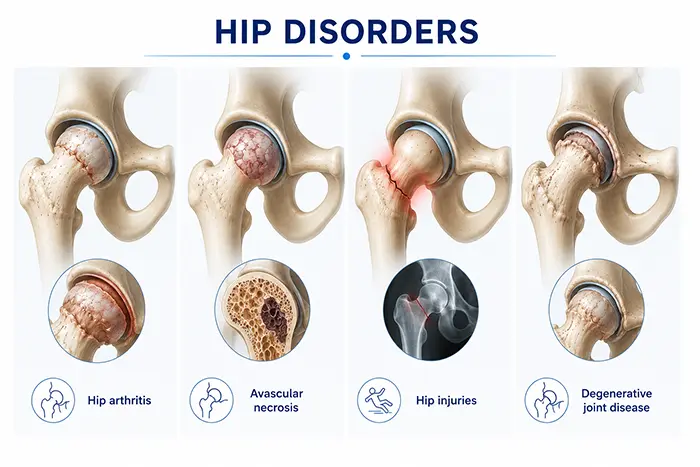
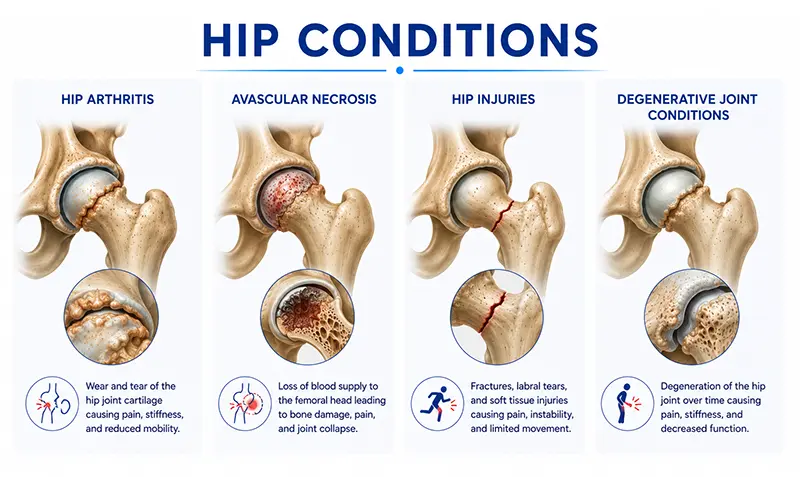
When hip arthritis or avascular necrosis makes walking, sitting and sleeping painful, a total hip replacement can relieve pain and restore mobility. Dr. Amyn Rajani performs robotic-assisted total hip replacement (robotic THR) in Mumbai, using a CT-based 3D plan to guide implant position, leg length and hip mechanics for your anatomy.
- 20+ Years of Clinical Experience
- Robotic-Assisted Total Hip Replacement
- M.S. Orth (Gold Medallist)
Call +91 22 2369 6161

Is Robotic Total Hip Replacement Right for You?
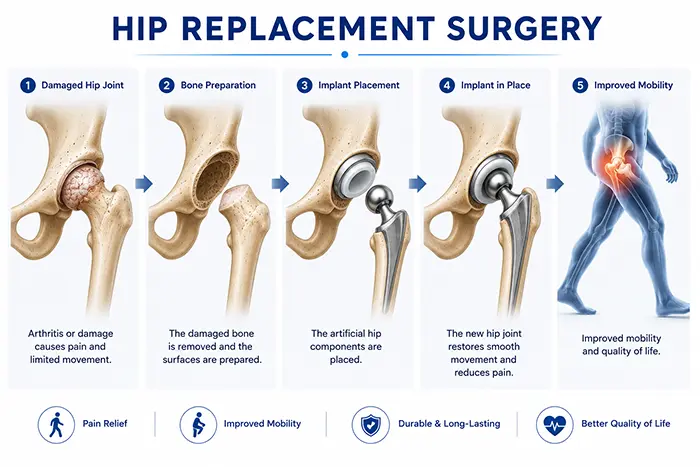
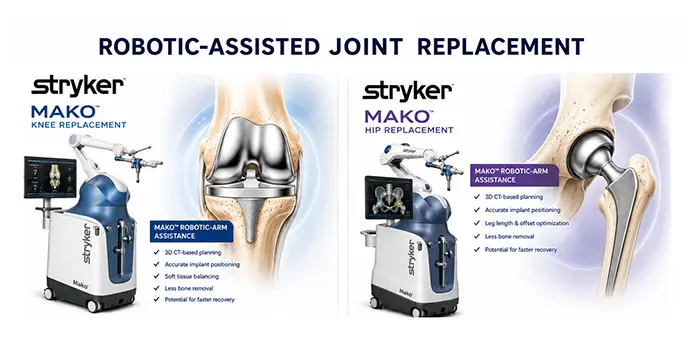
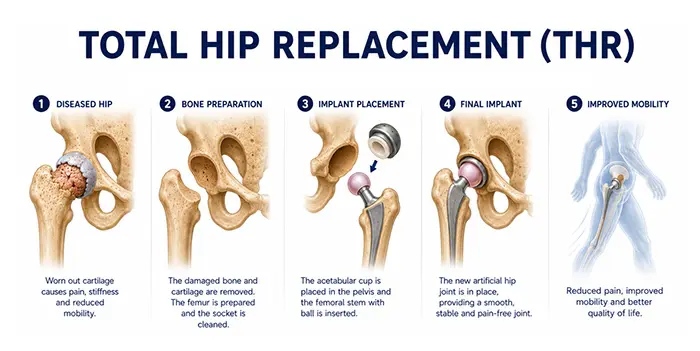
Robotic total hip replacement replaces the worn ball and socket of the hip joint with artificial components. Robotic-arm assistance helps the surgeon prepare the socket and position the implants according to a personalised plan, which is important for a stable hip and equal leg length.
It may be considered when:
- Hip or groin pain limits walking, sitting, climbing stairs or putting on shoes and socks.
- X-rays or MRI show advanced arthritis or avascular necrosis (AVN) of the hip.
- Pain continues despite physiotherapy, medication, injections or activity changes.
- Hip stiffness, a limp or a feeling of one leg being shorter affects daily life.
- Hip pain regularly disturbs your sleep or rest.

How Does Dr. Rajani Assess Your Hip?
Pain around the hip can come from the joint itself, the lower back or the surrounding tendons. Dr. Rajani considers your symptoms, examination findings and imaging together before recommending a hip replacement, hip arthroscopy or a non-surgical approach.
Imaging Review:
X-rays of the pelvis and hip, MRI where avascular necrosis is suspected, and a CT scan for robotic surgical planning.

Clinical Examination:
Range of motion, gait, limp, leg length, muscle strength and a check of the spine to confirm the source of pain.

Leg Length and Hip Mechanics:
Leg length and hip offset are measured carefully, as restoring them is key to a comfortable, stable hip.

Overall Health:
Age, body weight, bone quality, diabetes, heart health and vitamin D3 levels, which influence anaesthesia, recovery and implant longevity.

Your Robotic Total Hip Replacement Journey
A structured five-step pathway takes you from your first consultation and CT-based planning through surgery to a confident return to everyday activities.
01. Consultation and Imaging
Dr. Rajani reviews your symptoms, X-rays and MRI, examines your hip and spine, and confirms whether hip replacement is the right option.
02. CT-Based 3D Planning
A CT scan of your pelvis and hip creates a 3D model used to plan implant size, socket angle, leg length and offset before surgery.
03. Robotic-Assisted Surgery
Under spinal or general anaesthesia, the robotic arm helps Dr. Rajani prepare the socket and position the cup according to the plan. Surgery typically takes 1 to 2 hours.

04. Early Mobilisation
Most patients stand and walk with support within 24 hours of surgery, with a hospital stay of around 3 to 5 days.

05. Rehabilitation and Follow-Up
Physiotherapy and regular reviews help most patients walk independently within 4 to 6 weeks and return to most daily activities by around 3 months.
Robotic Total Hip Replacement: What You Should Know
Understanding who benefits, how robotic assistance helps, what recovery involves and what the alternatives are helps you make a confident, informed decision.
Who Is a Good Candidate?

- Hip Osteoarthritis – Advanced wear of the cartilage in the ball and socket.
- Avascular Necrosis – Collapse of the femoral head due to loss of blood supply.
- Inflammatory Arthritis – Such as rheumatoid arthritis or ankylosing spondylitis affecting the hip.
- Post-Traumatic Arthritis – Joint damage after a previous hip fracture or injury.
- Hip Dysplasia – A shallow hip socket that can lead to early arthritis.
How Robotic Assistance Helps
- CT-Based 3D Plan – Implant size and position are planned around your anatomy.
- Accurate Cup Positioning – The robotic arm helps place the socket at the planned angle.
- Leg Length and Offset – Measured during surgery to help restore natural hip mechanics.
- Surgeon-Controlled – Dr. Rajani plans and performs the operation; the robot assists.
Who May Not Be Suitable?
- Active Infection – Infection in the hip or elsewhere must be treated first.
- Early Hip Problems – Symptoms may still respond to non-surgical treatment or hip arthroscopy.
- Uncontrolled Medical Conditions – Such as heart disease or diabetes that raise surgical risk.
- Pain Arising From the Spine – Back problems can mimic hip pain and need separate treatment.
- Metal Implants Around the Hip – These may affect CT-based planning; a conventional technique may be used.
Recovery Timeline
- Day 1 to 2 – Standing and walking with a walker under physiotherapy supervision.
- Week 2 to 6 – Progressing from a walker to a stick as strength improves.
- Week 6 to 12 – Walking independently and returning to most daily activities, including driving when advised.
- 3 to 6 Months – Low-impact activities such as walking, cycling and swimming.


Alternatives to Consider
- Physiotherapy – Strengthening and stretching exercises to support the hip.
- Medication and Activity Changes – To manage pain in milder arthritis.
- Injections – Image-guided injections for temporary pain relief.
- Hip Arthroscopy – Keyhole surgery for selected hip problems without advanced arthritis.
- Conventional Total Hip Replacement – Performed with standard instruments and X-ray planning.
Risks and Implant Longevity
- Possible Risks – Infection, blood clots, dislocation and, rarely, nerve or blood vessel injury.
- Leg Length Difference – Careful planning aims to minimise this, but small differences can occur.
- Implant Survival – Most modern hip replacements function well for 15 to 20 years or more.
- Revision Surgery – If an implant wears or loosens, it can be replaced in a revision operation.

Robotic vs Conventional Total Hip Replacement
Both approaches use similar hip implants. Robotic assistance changes how the operation is planned and how precisely the socket is prepared and positioned. Read more about hip replacement in Mumbai.
| Factor | Robotic Total Hip Replacement | Conventional Total Hip Replacement |
|---|---|---|
| Planning | CT-based 3D plan of your pelvis and hip. | Based on X-rays and templating. |
| Socket preparation | Guided by the robotic arm within planned boundaries. | Performed with manual reamers and guides. |
| Cup positioning | Checked against the plan in real time. | Relies on instruments and surgeon judgement. |
| Leg length and offset | Measured during surgery against the plan. | Assessed with intra-operative checks. |
| Accuracy | Studies show more consistent cup positioning. | Accurate in experienced hands, with greater variability. |
| Long-term results | Long-term data are still emerging. | Decades of proven long-term results. |
Travelling to Mumbai for Hip Replacement?
Patients from other cities and countries can begin with an online consultation by sharing their hip X-rays and MRI in advance. Dr. Rajani can assess whether robotic total hip replacement may be suitable and help you plan your visit to Mumbai.
About Dr. Amyn Rajani
Dr. Rajani is a Mumbai-based knee, shoulder and hip surgeon with robotic surgery certification and experience in robotic-assisted hip and knee replacement.
International Course Faculty
Holds 5 international faculty appointments.

Peer-Reviewed Research
His research in joint replacement has been published in peer-reviewed orthopaedic journals.

3,000+ Procedures, including knee reconstruction, joint replacement, and arthroscopy.
Google Scholar Profile
His publications and citations are listed on his Google Scholar profile.

Robotic Surgery Certified
He is certified on the MAKO, CORI and ROSA robotic surgery systems.
100+ Research Citations
Dr. Rajani's published research in peer-reviewed orthopaedic journals has been cited more than 100 times.

Record Recognition
He has been recognised in the India Book of Records for a bilateral partial knee replacement performed on the heaviest patient.
Considering Robotic Hip Replacement From Outside Mumbai?
If travelling to Mumbai for an initial assessment is difficult, you can start with an online consultation with Dr. Amyn Rajani. Share your hip X-rays and MRI in advance for a review of whether robotic total hip replacement is suitable for you. If surgery is recommended, your visit to Mumbai can be planned around it.
Frequently Asked Questions
Q1. What is robotic total hip replacement?
It is a total hip replacement in which a CT-based 3D plan and a robotic arm help the surgeon prepare the socket and position the implants accurately. The worn ball and socket are replaced with artificial components to relieve pain and restore movement.
Q2. Who needs a total hip replacement?
It is usually advised for advanced hip arthritis, avascular necrosis or other hip joint damage when pain and stiffness limit daily life despite non-surgical treatment. Dr. Rajani confirms whether surgery is needed after examining your hip and reviewing your imaging.
Q3. Is robotic hip replacement better than conventional hip replacement?
Robotic assistance gives more consistent cup positioning and helps the surgeon manage leg length and offset. Whether this leads to better long-term results than a well-performed conventional hip replacement is still being studied, so the choice is made individually. Dr. Rajani also uses robotic assistance for total and partial knee replacement.
Q4. Does the robot perform the surgery?
No. Dr. Rajani plans and performs the operation. The robotic arm provides guidance and real-time feedback so that socket preparation and cup position follow the plan.
Q5. Do I need a CT scan before robotic hip replacement?
Yes. A CT scan of the pelvis and hip is used to create a 3D model of your anatomy, which forms the basis of the surgical plan.
Q6. How soon can I walk after robotic hip replacement?
Most patients stand and walk with support within 24 hours of surgery, progress to a stick over the following weeks and walk independently by around 4 to 6 weeks.
Q7. How long will I stay in hospital?
Most patients stay in hospital for around 3 to 5 days, until they can walk safely, manage stairs and control pain with oral medication.
Q8. Are there precautions after hip replacement?
In the early weeks, you may be advised to avoid certain hip positions, such as deep bending or crossing your legs, to protect the new joint while it heals. Dr. Rajani and the physiotherapy team will give you specific guidance.
Q9. How long does a hip replacement last?
Most modern hip replacements continue to function well 15 to 20 years or more after surgery. Implant life depends on activity level, body weight, bone quality and implant position.
Q10. What is the cost of robotic hip replacement in Mumbai?
The cost depends on the hospital, room category, implant, whether one or both hips are treated and your insurance cover. An individual estimate is provided after consultation.