Reverse Shoulder Replacement Surgeon in Mumbai

Restoring Shoulder Function When the Rotator Cuff Cannot

When severe shoulder arthritis is combined with a damaged or irreparable rotator cuff, a standard shoulder replacement may not work well. Dr. Amyn Rajani performs reverse total shoulder replacement in Mumbai, a specialised procedure that relies on the deltoid muscle to lift the arm, helping to relieve pain and restore everyday function.

  • 20+ Years of Clinical Experience
  • 3,000+ Procedures Performed
  • M.S. Orth (Gold Medallist)

Call +91 22 2369 6161

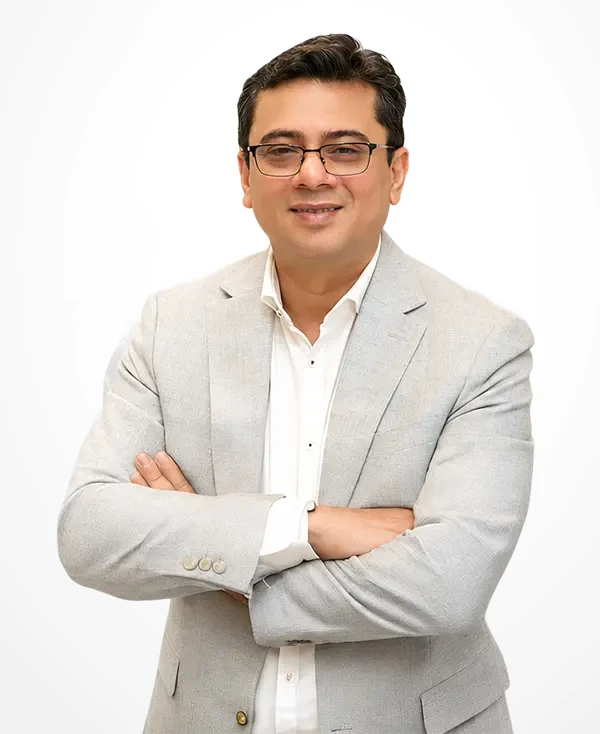
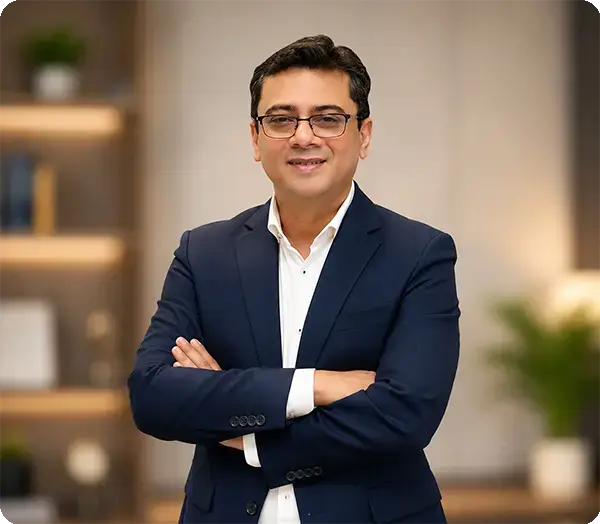
Dr. Amyn Rajani

How Is a Reverse Shoulder Replacement Different?

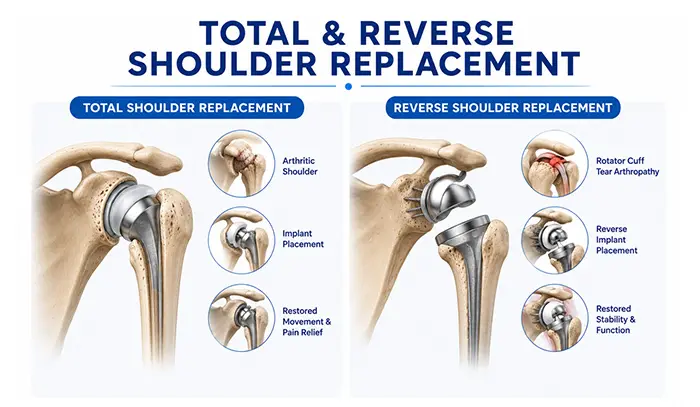
In a standard shoulder replacement, the implant copies your natural anatomy and depends on a working rotator cuff. A reverse shoulder replacement switches the ball and socket: the ball is fixed to the shoulder blade and the socket to the upper arm bone. This allows the deltoid muscle, rather than the rotator cuff, to power arm movement.

It may be recommended when:

  • A massive rotator cuff tear is too large to be repaired.
  • Long-standing rotator cuff damage has led to arthritis (cuff tear arthropathy).
  • Severe shoulder arthritis is accompanied by rotator cuff damage.
  • A complex fracture of the upper arm bone is difficult to repair by other methods.
  • A previous rotator cuff repair or shoulder replacement has failed.

Dr. Amyn Rajani

How Does Dr. Rajani Assess Your Shoulder?

Reverse shoulder replacement is a major decision. Dr. Rajani evaluates your symptoms, imaging and shoulder function together to confirm whether it is the right operation for you, or whether another treatment may be more suitable.

Imaging ReviewImaging Review:
X-rays, MRI and, where needed, CT scans to assess the joint, bone stock and the condition of the rotator cuff.
Clinical ExaminationClinical Examination:
Shoulder movement, strength, rotator cuff and deltoid muscle function, stability and nerve status.
Treatment OptionsTreatment Options:
Whether physiotherapy, injections, rotator cuff repair, a standard shoulder replacement or a reverse replacement best suits your condition.
Overall HealthOverall Health:
Medical conditions such as diabetes or heart disease, bone quality, any signs of infection and your activity goals.

Your Reverse Shoulder Replacement Journey

A structured five-step pathway takes you from your first consultation through surgery and rehabilitation.

01. Consultation and Imaging01. Consultation and Imaging
Dr. Rajani reviews your history, X-rays and scans, and examines your shoulder to confirm the diagnosis and the need for surgery.

02. Preparing for Surgery02. Preparing for Surgery
Medical evaluation, blood tests and a review of your medicines. Exercises to strengthen the deltoid muscle may be advised.

03. Surgery03. Surgery
Under general anaesthesia, the damaged bone and cartilage are removed and the reverse implant is placed. Surgery usually takes 2 to 3 hours.
04. Hospital Stay04. Hospital Stay
Most patients stay in hospital for 1 to 3 days, with pain management, wound care and early guided movement.
05. Rehabilitation and Follow-Up05. Rehabilitation and Follow-Up
A phased physiotherapy programme restores movement and strength, with regular reviews to monitor healing and progress.


Reverse Shoulder Replacement: What You Should Know

Understanding which conditions it treats, who may not be suitable and what recovery involves helps you make a confident, informed decision.

Conditions Treated

Reverse Shoulder Replacement

  • Cuff Tear Arthropathy – Arthritis caused by a long-standing rotator cuff tear.
  • Massive Rotator Cuff Tears – Tears too large to be repaired.
  • Complex Shoulder Fractures – Fractures of the upper arm bone that are difficult to fix.
  • Failed Previous Surgery – Including failed rotator cuff repair or standard shoulder replacement.
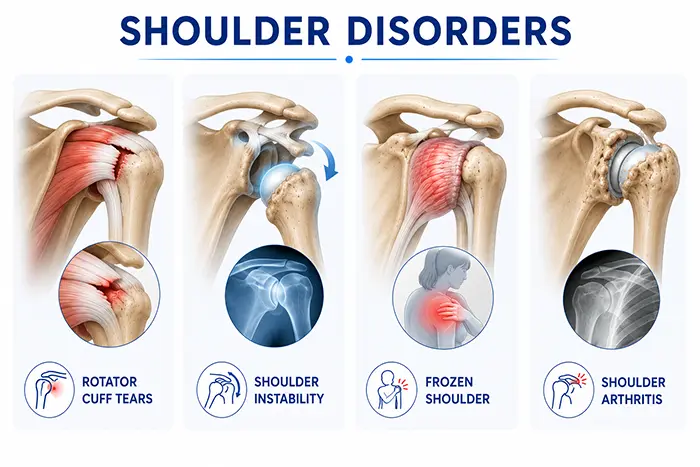
  • Chronic Shoulder Instability – Caused by rotator cuff deficiency.
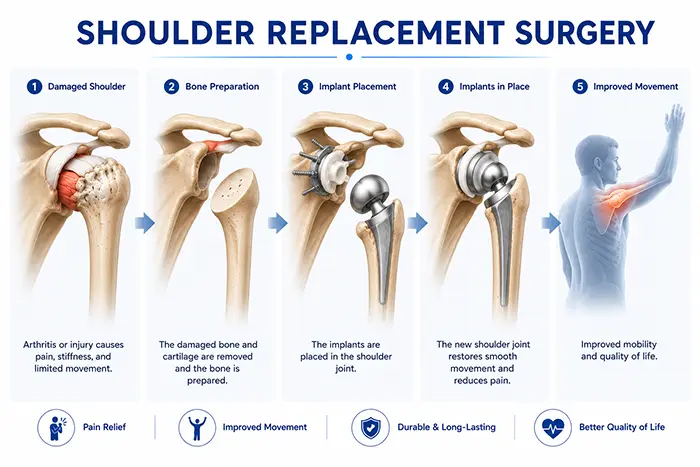
Shoulder Replacement Surgery in Mumbai

Who May Not Be Suitable?

  • Deltoid Weakness – The procedure relies on a working deltoid muscle.
  • Active Infection – Infection in or around the shoulder must be treated first.
  • Severe Medical Conditions – Such as uncontrolled diabetes or heart disease that raise surgical risk.
  • Poor Bone Quality – Bone that may not adequately support the implant.

Recovery After Surgery

  • Hospital Stay – Usually 1 to 3 days.
  • Early Rehabilitation – Gentle guided movements begin soon after surgery.
  • Driving – Usually possible around 6 to 8 weeks, once strength and mobility allow.
  • Activity Restrictions – Heavy lifting and strenuous activity are avoided for several months.
  • Full Recovery – May take 6 months to a year.

Risks and Implant Longevity

  • Infection – Rare, but can occur at the surgical site.
  • Nerve Injury – May cause weakness or numbness around the shoulder.
  • Dislocation – Less common than after a standard replacement, but possible.
  • Implant Loosening or Wear – May require revision surgery over time.
  • Implant Lifespan – On average around 10 to 15 years.

Shoulder Conditions

Reverse Shoulder Replacement for Fractures

Reverse Replacement for Shoulder Fractures

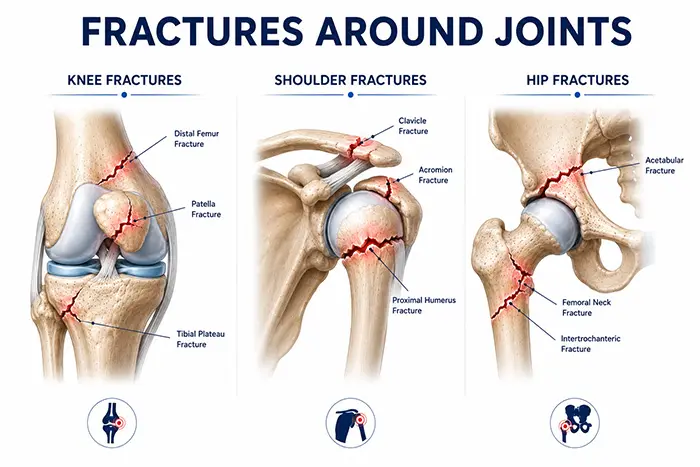
  • Complex Fractures – Multi-fragment fractures of the upper arm bone that are difficult to fix.
  • Older Patients – Where bone quality may make fracture fixation less reliable.
  • Rotator Cuff Damage – The implant does not depend on an intact rotator cuff.
  • Earlier Rehabilitation – Supports a structured return to function.

Before Deciding on Surgery

  • Physiotherapy – Strengthening the muscles around the shoulder.
  • Medication and Injections – To manage pain and inflammation.
  • Rotator Cuff Repair – Where the tear is still repairable.
  • Standard Shoulder Replacement – When arthritis is present but the rotator cuff is intact.

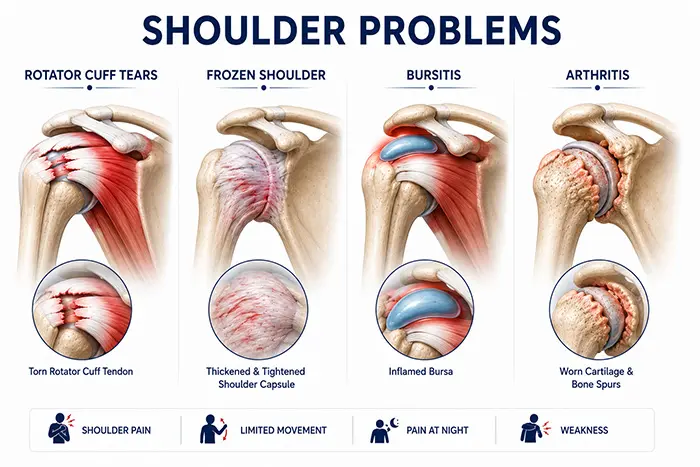
Rotator Cuff Problems and Shoulder Arthritis

Reverse vs Standard Shoulder Replacement

The right type of shoulder replacement depends mainly on whether your rotator cuff is working. Dr. Rajani explains which option suits your shoulder after a full assessment.

Factor Reverse Shoulder Replacement Standard Shoulder Replacement
Implant design Ball fixed to the shoulder blade; socket fixed to the upper arm bone. Ball replaces the head of the upper arm bone; socket replaces the glenoid.
Muscle that powers the arm Deltoid muscle. Rotator cuff.
Rotator cuff Does not need to be intact. Must be functioning.
Typically suited for Cuff tear arthropathy, massive irreparable tears, complex fractures and failed previous surgery. Shoulder arthritis with a healthy rotator cuff.
Movement after surgery Many patients regain significant function, though some overhead reach may be limited. Depends on the condition of the rotator cuff and rehabilitation.

Travelling to Mumbai for Surgery?

Patients from other cities and countries can begin with an online consultation by sharing their shoulder X-rays, MRI or CT scans in advance. Dr. Rajani can review whether reverse shoulder replacement may be suitable and help you plan your visit to Mumbai.


About Dr. Amyn Rajani

Dr. Rajani is a Mumbai-based knee, shoulder and hip surgeon with expertise in arthroscopy and joint replacement, and experience in complex shoulder reconstruction.

International Course FacultyInternational Course Faculty
Holds 5 international faculty appointments.
100+ Research Citations100+ Research Citations
Dr. Rajani's published research in peer-reviewed orthopaedic journals has been cited more than 100 times.
3,000+ Procedures3,000+ Procedures, including knee reconstruction, joint replacement, and arthroscopy.

Google Scholar ProfileGoogle Scholar Profile
His publications and citations are listed on his Google Scholar profile.
Robotic Surgery CertifiedRobotic Surgery Certified
He is certified on the MAKO, CORI and ROSA robotic surgery systems.

Complex Shoulder CasesComplex Shoulder Cases
He has performed reverse shoulder replacement for complex fractures and elderly patients, including an 85-year-old patient.
Record RecognitionRecord Recognition
His work has been recognised in the Limca Book of Records for performing the highest number of knee arthroscopy surgeries in a single day.

Considering Reverse Shoulder Replacement From Outside Mumbai?

If travelling to Mumbai for an initial assessment is difficult, you can start with an online consultation with Dr. Amyn Rajani. Share your shoulder X-rays and scans in advance for a review of your condition and whether reverse shoulder replacement is appropriate. If surgery is recommended, your visit to Mumbai can be planned around it.

Frequently Asked Questions

It is a type of shoulder replacement in which the positions of the ball and socket are switched: the ball is attached to the shoulder blade and the socket to the upper arm bone. This allows the deltoid muscle, rather than the rotator cuff, to move the arm.

It is typically recommended for patients with massive irreparable rotator cuff tears, cuff tear arthropathy, severe arthritis with rotator cuff damage, complex shoulder fractures, or a failed previous shoulder replacement or rotator cuff repair.

A standard shoulder replacement copies the natural anatomy and needs a functioning rotator cuff to stabilise and move the shoulder. A reverse replacement does not depend on the rotator cuff, which makes it suitable when the cuff is torn or not working.

The surgery typically takes about 2 to 3 hours, depending on the complexity of the case.

Most patients stay in hospital for 1 to 3 days after surgery.

Many patients experience significant improvement in pain and shoulder function. Some loss of range of motion, particularly when reaching overhead or behind the back, may remain.

Driving is usually allowed once you have regained sufficient strength and mobility, typically around 6 to 8 weeks after surgery.

On average, the prosthesis may last around 10 to 15 years, depending on activity level, overall health and rehabilitation. Some patients may need revision surgery if the implant loosens or wears over time.