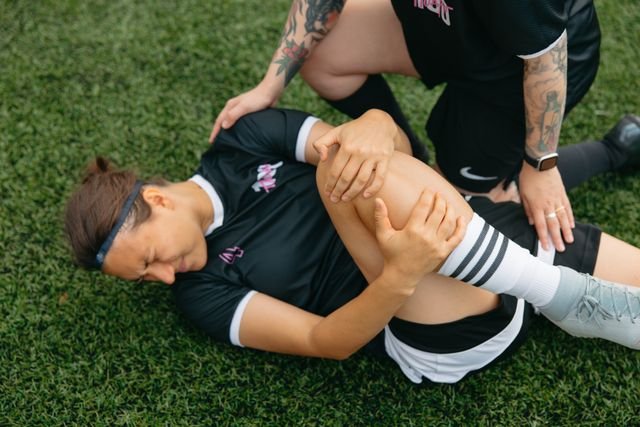
Knee pain is not something reserved for older adults or professional athletes. A cross-sectional study published in BMC Musculoskeletal Disorders found that nearly one in three young adults reported knee problems, with pain being the most common complaint. Many of these cases go unaddressed because people assume the discomfort will pass on its own.
Knee pain causes in younger people tend to differ from those in older adults. Osteoarthritis, for instance, is far less common before the age of 40. Instead, the most frequent knee pain reasons in this age group include overuse injuries, ligament problems, kneecap tracking issues, and tendon inflammation. The good news is that most of these respond well to conservative treatment when caught early.
This article walks through the most common causes, explains what you might feel and why, and covers practical options ranging from knee pain treatment at home through to clinical care.
Common Knee Pain Causes in Young Adults
1. Patellofemoral Pain Syndrome (Runner’s Knee)
Patellofemoral pain syndrome, often called runner’s knee, is one of the most frequently seen knee pain reasons in people under 40. The global prevalence among adolescents and young adults is estimated at between 22.7% and 28.9%, according to research published in the Journal of Pediatric Health Care (2025).
The pain sits at the front of the knee, behind or around the kneecap. It tends to worsen with prolonged sitting, squatting, going downstairs, or any activity that loads the patellofemoral joint. It is particularly common in people who have recently increased their training volume, changed their running surface, or started a new activity.
The underlying issue is usually a combination of factors: weak quadriceps or hip muscles, poor movement patterns, and increased stress on the kneecap joint. A 2024 systematic review and meta-analysis confirmed that strengthening exercises, particularly those targeting the quadriceps and hip muscles, are among the most effective conservative treatments for this condition.
2. ACL Injuries
The anterior cruciate ligament runs through the middle of the knee and is critical for stability during cutting, twisting, and landing movements. ACL injuries are among the most well-known knee pain causes in young, physically active people. They typically occur without contact, often during sports.
The sensation at the time of injury is often described as a pop followed by rapid swelling and difficulty bearing weight. Knee pain when bending or straightening the leg fully is common in the hours and days following the injury.
Left untreated, ACL injuries can lead to further damage. A study published in PMC found that medial meniscus tears were present in 80% of ACL injury cases examined arthroscopically, highlighting the risk of secondary injury when instability is not addressed.
3. Meniscus Tears
The menisci are two C-shaped pieces of cartilage that sit between the thigh bone and shin bone, acting as shock absorbers. Tears are a frequent knee pain reason in young adults, often occurring during sports or activities that involve sudden rotation while the foot is planted.
Symptoms vary depending on the location and extent of the tear. A common pattern is pain along the inner or outer edge of the knee, combined with stiffness and knee pain when bending fully. Some people notice a locking or catching sensation, where the knee seems to get stuck at a particular angle.
Smaller tears sometimes settle with rest and physiotherapy. Larger or complex tears may require arthroscopic surgery. Dr Rajani’s page on knee arthroscopy provides a useful overview of what the procedure involves and what recovery looks like.
4. Patellar Tendinopathy (Jumper’s Knee)
The patellar tendon connects the kneecap to the shin bone and plays a central role in jumping, running, and climbing stairs. Repeated stress on this tendon, without adequate recovery, can lead to patellar tendinopathy, one of the more common knee pain causes in athletes involved in basketball, volleyball, and distance running.
The pain typically sits just below the kneecap and is usually worse at the beginning of activity, often easing off once warmed up. Stiffness the following morning is also a typical pattern. The condition tends to be stubborn and responds slowly to treatment, which is why early intervention matters.
5. IT Band Syndrome
The iliotibial (IT) band is a thick band of connective tissue running along the outer thigh from the hip to just below the knee. When it becomes tight or overloaded, it rubs against the outer part of the knee, causing pain. This is one of the most common knee pain reasons in runners, particularly those who train on hilly terrain or have recently increased their mileage.
The pain is usually localised to the outer knee and tends to come on at a predictable point during a run rather than from the start. Stretching, hip strengthening, and temporary reduction in training load usually form the core of treatment.
6. Bursitis
Bursae are small fluid-filled sacs that reduce friction between the moving parts of the knee. When a bursa becomes inflamed, usually through repeated pressure or a direct blow, it causes localised swelling and pain. Prepatellar bursitis, the type in front of the kneecap, is one of the common knee pain causes in people whose work or sport involves frequent kneeling.
Bursitis typically responds well to rest, ice, and time. In persistent cases, a doctor may recommend aspiration or a corticosteroid injection, depending on the circumstances.
7. Early-Onset Osteoarthritis
While osteoarthritis is usually associated with older adults, it can affect people in their 30s and even younger, particularly those who have had previous knee injuries or who have been involved in high-impact sport for many years. Post-traumatic arthritis following an ACL injury or a significant meniscus tear is one of the more recognised knee pain causes in young adults with a history of knee problems.
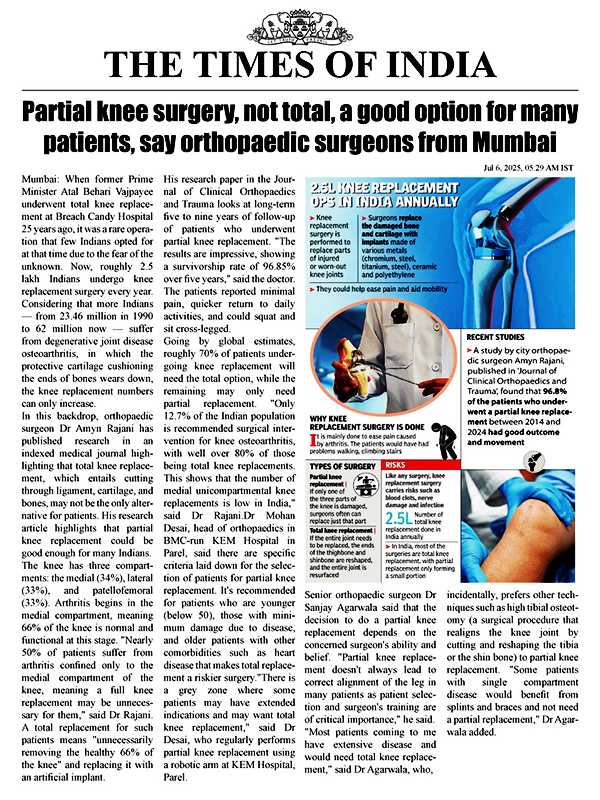
For patients at this stage, conservative management is usually tried first. This includes physiotherapy, weight management, activity modification, and anti-inflammatory medication. For those who are not suitable for or do not require joint replacement, a high tibial osteotomy may be worth discussing with a surgeon.
Research Insight: Dr Amyn Rajani on ACL Risk in Young Adults
Dr Amyn Rajani is a Consultant Knee, Shoulder & Hip Surgeon based in Mumbai with over two decades of clinical and research experience. One area of his published work is directly relevant to understanding knee pain causes in younger patients.
In a study published in the Journal of Arthroscopic Surgery and Sports Medicine (February 2025), Dr Rajani and his colleagues investigated the relationship between femoral intercondylar notch morphology and non-contact ACL tears. The intercondylar notch is the bony tunnel at the bottom of the thigh bone through which the ACL passes. The study found a notable association between a triangular-shaped notch, younger age, and male sex with a higher rate of non-contact ACL tears. Triangular notches were more common in participants with a mean age of approximately 25 years.
What this means practically: some young men who experience ACL injuries without a major collision may have an anatomical predisposition related to the shape of this notch. The study’s authors note that understanding notch morphology could help surgeons optimise reconstruction technique and inform injury prevention strategies. The full publication is available through his Scientific Publications page and Google Scholar profile.
Why Does the Knee Hurt When Bending?
Knee pain when bending is one of the most common complaints people describe, and the location of that pain often points towards a specific cause.
- Pain at the front of the knee: More often associated with patellofemoral pain syndrome or patellar tendinopathy.
- Pain along the inner or outer joint line: More likely to suggest a meniscus problem or collateral ligament issue.
- Pain at the back of the knee: Can indicate a Baker’s cyst, a hamstring issue, or posterior compartment irritation.
- Pain with a catching or locking sensation: More likely to involve a structural problem such as a meniscus tear or a loose fragment in the joint.
These are patterns, not diagnoses. If knee pain when bending is persistent, worsening, accompanied by swelling, or following an injury, a clinical assessment is necessary to identify the actual cause.
Knee Pain Treatment at Home
For many acute and mild knee complaints, home management provides genuine relief and allows the tissues time to recover. Here is a practical summary of options that are well-supported by evidence.
The RICE Method
Rest, Ice, Compression, and Elevation remains a reliable first-line knee pain remedy for acute injuries and flare-ups. It is most effective in the first 24 to 72 hours after an injury or acute worsening.
- Rest: Reduce activity that aggravates the knee. You do not need to stop moving entirely, but avoid loading the joint through its painful range until things settle.
- Ice: Apply an ice pack wrapped in a cloth for 15 to 20 minutes every few hours. Do not place ice directly against the skin.
- Compression: A supportive bandage or knee sleeve helps reduce swelling and provides some structural support.
- Elevation: Keeping the knee above heart level reduces fluid accumulation in the joint.
Strengthening Exercises
Weak muscles around the knee are a contributing factor in many of the conditions described above. Targeted strengthening exercises are one of the most consistently effective knee pain remedies across multiple conditions. The quadriceps, hamstrings, and hip muscles all play a role in protecting the knee joint.
Starting with low-load exercises such as straight leg raises, quad sets, and clamshells is usually the safest approach before progressing. Dr Rajani’s knee rehabilitation page covers this in detail.
Activity Modification
Sometimes what is the fastest way to relieve knee pain is simply removing the activity that is causing the problem. Continuing to run, squat, or play sport through a reactive tendon or inflamed bursa typically prolongs the problem. Identifying the load threshold and working within it, while building capacity over time, is often more effective than complete rest.
Over-the-Counter Medication
For a short-term knee pain remedy, over-the-counter anti-inflammatory medicines such as ibuprofen can reduce swelling and discomfort. They are most useful for acute inflammatory episodes rather than as a long-term strategy. Always check with a pharmacist or doctor before taking any medication, particularly if you have other health conditions.
Heat Therapy
Heat is generally more useful for stiffness and chronic aches than for fresh injuries. Applying warmth before activity can loosen a stiff knee, while ice after activity is better for managing any post-exercise swelling. This is a practical pattern many people find helpful as a knee pain treatment at home.
When Home Treatment Is Not Enough
Not all knee pain reasons respond to home care. Some situations require clinical assessment sooner rather than later.
- The knee is significantly swollen after an injury.
- You heard or felt a pop at the time of injury.
- The knee gives way or feels unstable during activity.
- Pain does not improve after two to three weeks of sensible home management.
- You develop calf pain, swelling, warmth, or redness alongside knee pain, which can occasionally signal a deep vein thrombosis and requires urgent assessment.
For conditions that have not responded to conservative care, options including injections, physiotherapy programmes, arthroscopic procedures, or surgical reconstruction may be discussed. Ligament-related problems such as MPFL tears are covered in detail on Dr Rajani’s MPFL reconstruction page. For a broader overview of knee surgical options, see the partial knee replacement and total knee replacement pages.
FAQs about Knee Pain in Young Adults
What are the most common knee pain causes in young adults?
Patellofemoral pain syndrome, ACL tears, meniscus injuries, and patellar tendinopathy are the most frequently seen knee pain causes in people under 40. Overuse injuries are particularly common in runners and athletes who increase training load too quickly.
What is the fastest way to relieve knee pain at home?
For acute pain, what is the fastest way to relieve knee pain is the RICE method: rest the knee, apply ice for 15 to 20 minutes every few hours, use a compression bandage, and elevate the leg. Anti-inflammatory medication can also help reduce swelling in the short term.
When should I see a doctor for knee pain?
Seek an assessment if the knee is swollen after an injury, if it felt unstable or you heard a pop, or if pain has not improved after two to three weeks of home management. Sudden severe pain or calf swelling alongside knee pain also warrants prompt review.
Can knee pain when bending be treated at home?
Knee pain when bending related to mild overuse or inflammation often responds to rest, ice, and gradual strengthening. If the pain is persistent, worsening, or follows an injury, a clinical assessment is needed to rule out structural damage before starting exercises.
Does knee pain in young adults always need surgery?
No. The majority of knee pain reasons in young adults respond well to physiotherapy, load management, and targeted exercise. Surgery is considered when conservative treatment has not worked, or when there is a structural problem such as a ligament tear that affects function and stability.